
In many conveyor systems, the most important parts are not always the largest ones. A small guide rail, wear strip or plastic sliding profile can decide whether bottles move smoothly, cartons stay aligned, or machine parts keep running without unnecessary noise and wear.
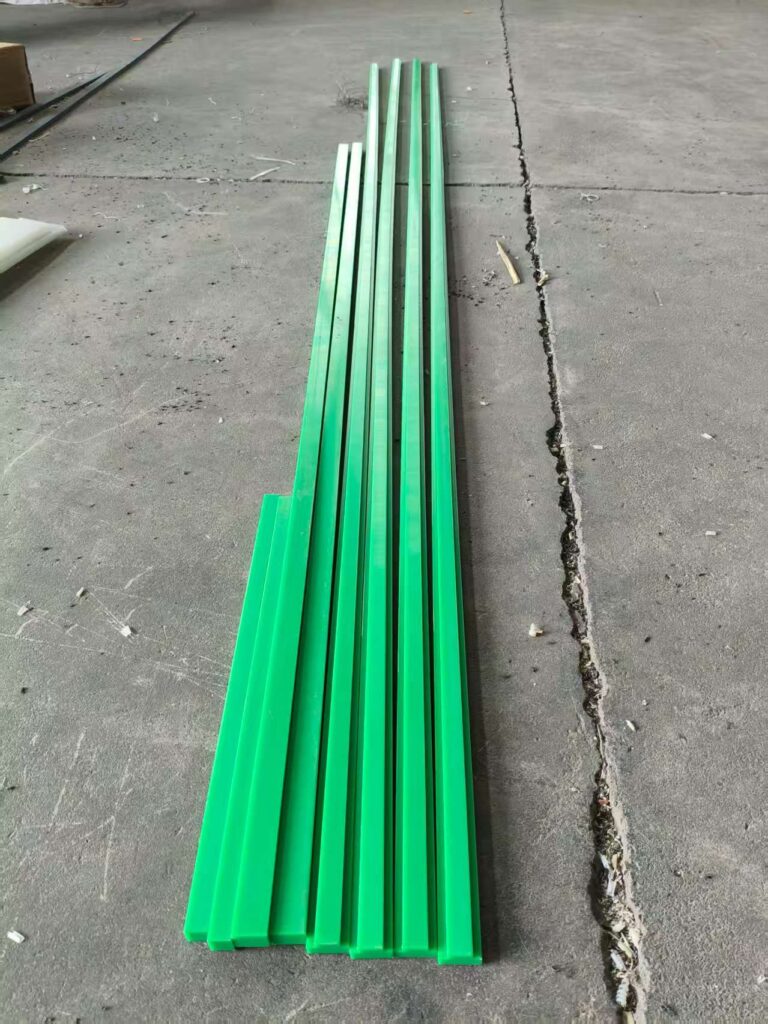
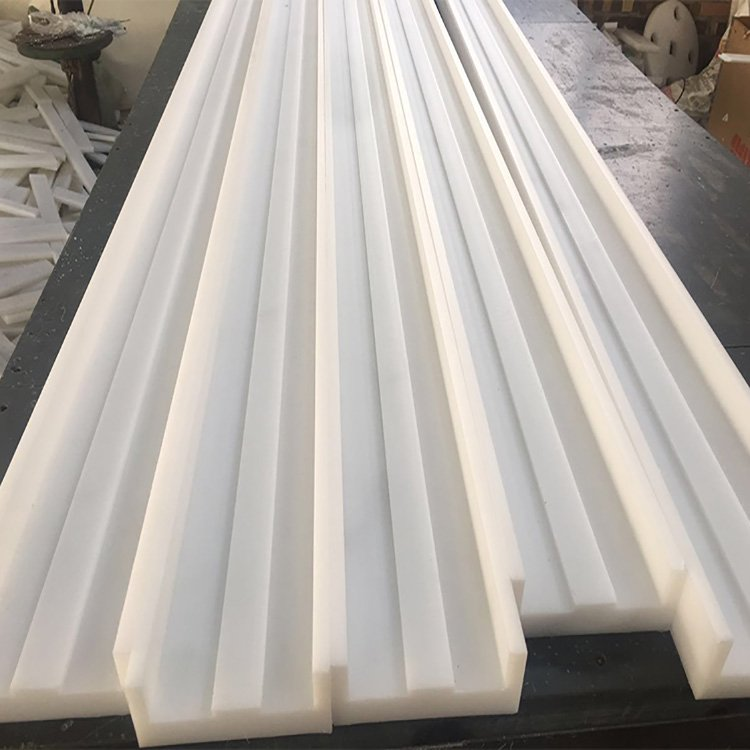
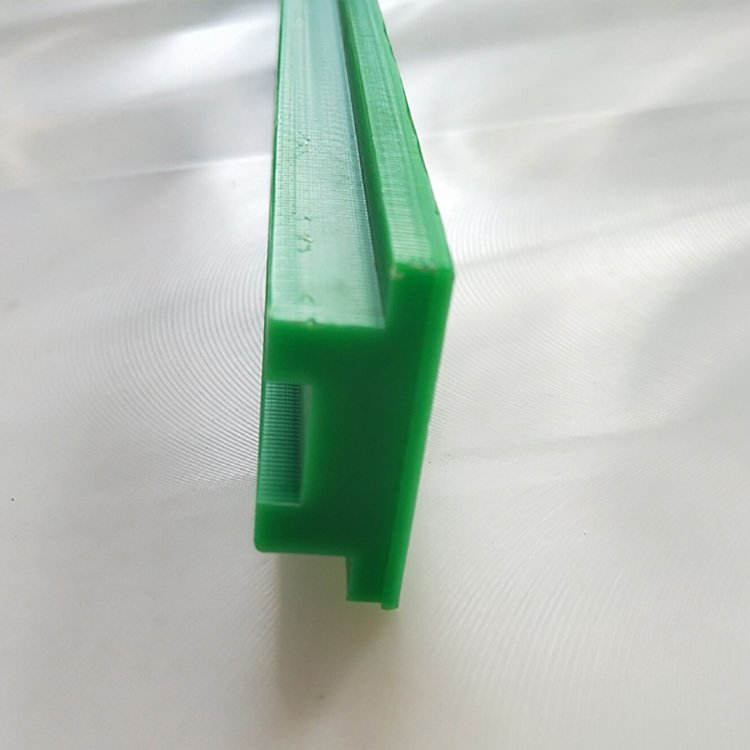
The green and white plastic profiles shown in these production photos are typical custom UHMWPE / PE guide rails used in conveyor, packaging, food processing, beverage, automation and general machinery systems. They are designed to guide, support, protect and reduce friction between moving parts.
Unlike standard metal rails, UHMWPE guide rails are lightweight, self-lubricating and corrosion-resistant. For equipment builders and maintenance teams, this makes them a practical replacement for metal components in many low-friction sliding applications.
What Are UHMWPE Guide Rails?
UHMWPE guide rails are plastic guide profiles made from ultra-high molecular weight polyethylene or high-performance polyethylene materials. They are commonly used as sliding parts, side guides, chain guides, wear strips, conveyor rails and custom support profiles.
In actual use, these parts are often installed along conveyor lines, bottle turning systems, packaging machines, textile machinery, food processing equipment, mining machinery and automated production lines.
Their main function is simple but important:
They help moving products or machine parts travel in the correct direction while reducing friction, noise and wear.
Compared with metal guide rails, PE and UHMWPE profiles are easier to machine, lighter in weight and less likely to damage the contact surface of the moving product or chain.
Why Plastic Guide Rails Are Used Instead of Metal
Metal guide rails are strong, but they are not always the best choice for sliding contact. In many machines, metal-to-metal contact creates noise, vibration, lubrication problems and surface damage.
A polyethylene guide rail solves many of these issues.
Because PE and UHMWPE materials have a naturally low friction surface, they can work as sliding components without frequent lubrication. This is especially useful for conveyor systems where oil contamination, dust collection or maintenance downtime must be reduced.
For example, in packaging and bottle conveyor lines, plastic guide rails can help products move smoothly without scratching the surface. In automated machinery, they can reduce vibration and protect moving parts. In wet or slightly corrosive environments, they do not rust like steel rails.
Key Advantages of UHMWPE and PE Guide Rails
1. Low Friction and Self-Lubricating Performance
One of the biggest reasons buyers choose UHMWPE conveyor guide rails is their low friction performance. The smooth plastic surface helps reduce sliding resistance between the rail and the moving part.
This is useful for conveyor chains, bottles, cartons, rollers and other moving components. In many applications, it can reduce the need for frequent lubrication and lower the risk of machine stoppage caused by excessive friction.
2. Good Wear Resistance
Guide rails are often installed in positions where repeated contact happens every day. If the material wears too quickly, the conveyor may become unstable or require frequent replacement.
UHMWPE and PE materials are widely used because they offer strong wear resistance in sliding and impact conditions. For many industrial users, this means longer service life and lower replacement frequency compared with low-grade plastic parts.
3. Noise Reduction
Plastic guide rails can also help reduce operating noise. Metal rails may create sharp noise during continuous friction, especially in conveyor and packaging lines. PE and UHMWPE profiles absorb part of the vibration and create smoother sliding contact.
This is valuable for factories that want a cleaner, more comfortable production environment.
4. Corrosion Resistance
PE and UHMWPE guide rails do not rust. They can be used in humid workshops, cleaning areas, light chemical environments and production lines where moisture may be present.
For food, beverage, packaging and chemical equipment, corrosion resistance is often one of the reasons plastic guide components are selected.
5. Custom Shapes for Real Equipment
The product photos show several types of custom profiles, including curved green rails, long straight strips, drilled guide rails, white wear strips and special machined plastic parts.
This is important because many conveyor systems do not use only standard rectangular strips. They may need:
- curved guide rails
- drilled mounting holes
- U-shaped channels
- T-shaped wear strips
- side guide profiles
- chain guide rails
- custom plastic sliding blocks
- machined PE components
For equipment manufacturers, customization is often more important than buying a standard size.
Common Applications
UHMWPE and PE guide rails are widely used in different industrial systems.
In beverage and food machinery, they can guide bottles, cans, cartons and containers along conveyor lines. In packaging equipment, they help keep materials moving in the correct direction. In automation systems, they work as sliding support parts. In mining and bulk material equipment, PE wear strips can help reduce friction and protect equipment surfaces.
Typical application areas include:
| Application | Function of Guide Rail |
|---|---|
| Conveyor systems | Side guide, chain guide, wear strip |
| Packaging machinery | Product alignment and sliding support |
| Food and beverage lines | Bottle, can and container guidance |
| Automation equipment | Low-friction sliding component |
| Textile machinery | Wear-resistant support and guide part |
| Mining machinery | Protective wear strip and sliding liner |
| Custom machinery | Machined plastic profile replacement for metal parts |
How Custom PE Guide Rails Are Made
For most custom projects, the process starts with the working condition rather than only the drawing.
A buyer usually needs to confirm the material, dimensions, hole positions, installation method and operating environment. The guide rail may be produced by extrusion first, then cut, drilled, milled or machined according to the final design.
For special shapes, CNC machining can be used to create accurate profiles, grooves, mounting holes or curved sections.
When choosing a supplier, buyers should not only ask for price. They should also check whether the factory can support extrusion, cutting, drilling, milling and custom machining. This helps avoid problems when the rail shape is not a standard stock item.
What Buyers Should Confirm Before Ordering
To choose the right custom UHMWPE guide rail, the following details should be checked before production:
| Item | Why It Matters |
|---|---|
| Material grade | UHMWPE, HDPE or PE may be selected according to working load and wear demand |
| Drawing or sample | Ensures the profile, hole position and installation size are correct |
| Color | Green, white and other colors can be selected according to equipment design |
| Length and section size | Affects installation stability and machining cost |
| Mounting holes | Hole diameter and spacing must match the machine frame |
| Working environment | Temperature, humidity, friction and chemical contact affect material choice |
| Order quantity | Small batch and batch production may use different cost structures |
For replacement projects, sending an old sample or clear photos can also help the manufacturer understand the real installation condition.
Why Work With a Custom Plastic Parts Manufacturer
For industrial guide rails, a general plastic sheet supplier may not always be enough. The product often needs both material knowledge and machining experience.
Dezhou Kunzheng Composite Materials Co., Ltd. produces engineering plastic products including nylon parts, UHMWPE sheets, PE sheets, PP sheets, wear-resistant liners and various machined plastic components. The factory is equipped for PE/PP extrusion, molding and automatic machining, which supports custom guide rails, wear strips and special plastic profiles for different machinery applications.
For B2B buyers, this means the product can be discussed based on drawings, samples or actual operating conditions instead of only fixed catalog sizes.
Conclusion
A good conveyor guide rail should not only fit the machine. It should also reduce friction, protect moving parts, lower noise and make daily maintenance easier.
For conveyor systems, packaging machinery, beverage lines and automation equipment, custom UHMWPE guide rails provide a practical balance between wear resistance, low friction, corrosion resistance and machining flexibility.
When the profile shape, hole position and working conditions are matched correctly, these plastic guide rails can become a small but valuable upgrade for the entire production line.
FAQ
What is the main use of UHMWPE guide rails?
UHMWPE guide rails are mainly used to guide, support and protect moving parts in conveyor systems, packaging machines, food and beverage lines, automation equipment and general industrial machinery.
Can PE guide rails replace metal guide rails?
In many low-friction sliding applications, PE and UHMWPE guide rails can replace metal rails. They are lighter, quieter, corrosion-resistant and do not require frequent lubrication. However, the final choice depends on load, temperature and working conditions.
Can the guide rails be customized according to drawings?
Yes. Custom guide rails can be produced according to drawings, samples, installation dimensions or actual machine requirements. Common custom work includes cutting, drilling, milling, grooving and shaped profile machining.
What colors are available?
Green and white are common colors shown in the product photos. Other colors may be selected depending on production requirements and material availability.
Are these guide rails suitable for conveyor equipment?
Yes. These PE and UHMWPE profiles are commonly used as conveyor side guides, chain guides, wear strips and sliding rails in conveyor and packaging systems.
What information should I provide before ordering?
It is best to provide drawings, photos, sample dimensions, material preference, hole positions, quantity, application environment and whether the part will contact food, chemicals, moisture or high-friction moving parts.