


Most buyers first hear about IGI when they start comparing Lab Grown Diamonds. A seller may say the stone is “IGI certified,” but many customers do not know what that really means or how to use the report before placing an order.
IGI stands for International Gemological Institute. In the diamond trade, an IGI report is used to record the identity and quality details of a diamond. For lab grown diamonds, it is especially useful because it helps buyers check the stone’s origin, grade, measurements and report number before production begins.
What Does IGI Mean?
IGI is a gemological laboratory that grades diamonds, lab grown diamonds, Gemstones and Jewelry . For a diamond buyer, the most important point is simple: IGI does not make or sell the diamond. It examines the stone and issues a grading report.
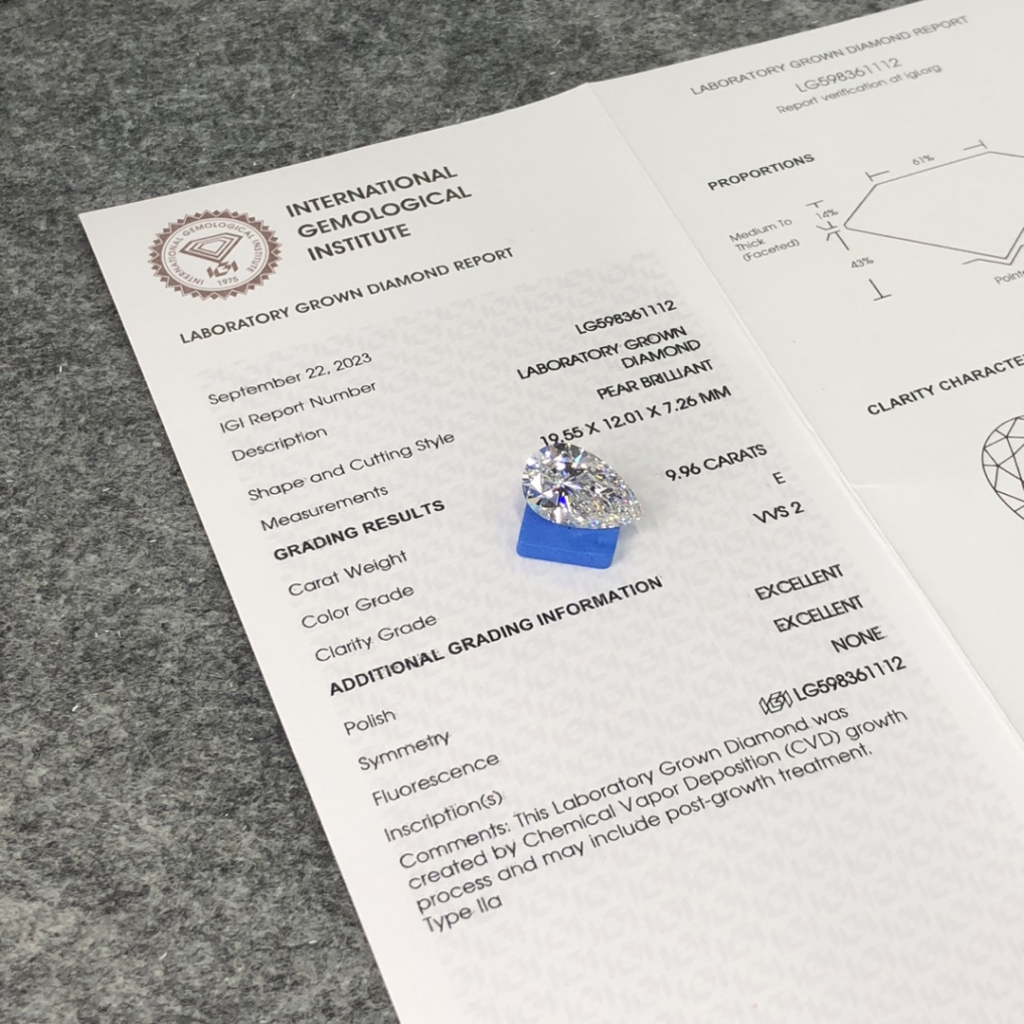
An IGI report usually includes the diamond shape, carat weight, color grade, clarity grade, measurements, polish, symmetry, fluorescence, inscription and comments. For lab grown diamonds, the report also states that the stone is laboratory grown.
This matters because photos alone are never enough. Two diamonds can look similar online, but the actual color, clarity, size and proportions may be very different.
Why Is IGI Common in Lab Grown Diamonds?
In the lab grown diamond market, IGI is widely used because its reports are practical for daily sourcing. Buyers can quickly check whether the diamond is lab grown, review the 4Cs, and compare different stones before choosing one for a ring, necklace, bracelet or earrings.
For jewelry brands, wholesalers and custom buyers, this makes communication much easier. Instead of saying “a nice pear diamond” or “a good oval stone,” both the buyer and manufacturer can work from the same report details.
At Floral Jewelry, this is important during custom production. Before setting a stone into gold or platinum, the report helps confirm whether the diamond size, shape and grade are suitable for the final design.
What Should Buyers Check on an IGI Report?
The first thing to check is the report number. This number should match the official online record.
Next, check the description. For a lab grown diamond, the report should clearly state that it is laboratory grown.
Then review the 4Cs: carat weight, color, clarity and cut. These details have a direct effect on appearance and price.
You should also check the measurements. This is often overlooked, but it is very important for custom jewelry. A pear, oval or emerald cut diamond with the same carat weight can look quite different depending on its length, width and depth.
Finally, look at polish, symmetry, fluorescence and inscription. These small details help confirm whether the stone matches the report and whether it is suitable for the jewelry design you want.